Awareness
Why Your Parent Says "I'm Fine" When They're Not
"I'm fine" from an aging parent is rarely literal. Here's what it's most often hiding, and the questions that get past it.

Sunday afternoon, you call. "Hi mom, how was your week?" She says "Oh, fine." Two seconds. No detail. The same answer she gave last Sunday and the Sunday before. You ask if she ate lunch. "Mm-hm." You ask if anyone came by. "Not really. I'm fine."
You hang up uneasy and don't know exactly why.
"I'm fine" from an aging parent is one of the most load-bearing phrases in the family-care relationship. It's rarely a literal description of how she is. It's usually doing some other work, often work she doesn't realize she's doing. Once you can hear what it's covering, the conversations get easier and the things that actually matter get caught earlier.
This post is what "I'm fine" is most often hiding, why parents reach for it, and the questions that actually get past it.
What "I'm fine" actually means
"I'm fine" is almost never a literal report. It's a piece of social architecture your parent has been using for decades, usually doing one of several jobs at once.
Older adults under-report problems to family at remarkably consistent rates. Research on the psychology of autonomy in aging is unambiguous: feeling in control of one's own life is psychologically central to older adults' wellbeing, per a 2021 integrative review of autonomy in elder care. Admitting a problem can feel, to your parent, like surrendering a piece of that control.
Add to that two cultural and generational layers. Most Canadians 70+ grew up in a culture where complaint was considered weakness, especially in front of family. Many were also raised on a more stoic communication model where "I'm fine" was the polite default regardless of what was happening underneath. The deflection isn't manipulation. It's muscle memory.
So when your mom says "I'm fine," she might mean any of several things:
- I'm physically OK and so is everything else.
- I'm mostly OK but a couple of things are bothering me.
- I'm not OK but I don't want to worry you.
- I'm not OK but I don't want to admit it.
- I'm not sure how I am, and the question is too hard to answer in one breath.
Your job isn't to crack the code in one Sunday call. It's to ask better questions over the long arc of the relationship so that the truth has a chance to come through.
The five things "I'm fine" is most often hiding
1. "I don't want to worry you"
The most common one. Your parent has watched you handle a job, kids, your own life. She doesn't want to add a worry to your list. So she answers "fine" before she even checks how she actually is. The deflection is loving. It's also, often, the source of the most preventable late-stage crises.
Tell: she answers fast and changes the subject quickly. Asks about you with energy that doesn't match her own description.
2. "I don't want to admit it to myself"
Closely related. The thought "something is changing in me" is the hardest one for most older adults to sit with. Saying "I'm fine" out loud is partly saying it inward. The phrase is doing emotional regulation, not reporting.
Tell: she says "fine" with extra emphasis, often followed by a comment about someone else who has it worse.
3. "I don't have the words for it"
Some changes don't lend themselves to a quick answer. "My friends are all gone or moved away and the days feel longer than they used to" is true for many older Canadians but extremely hard to compress into a phone call. "I'm fine" can mean "the real answer is too complicated."
Tell: she goes quiet after the "fine," rather than continuing the conversation naturally.
4. "I'm afraid of what comes next"
If she names a problem to you, she's afraid the problem's solution will be a thing she doesn't want: a doctor's visit, a stranger in her house, a conversation about giving up driving, a move. "I'm fine" protects the status quo. The cost is that the problem doesn't get help until it's bigger.
Tell: she changes the subject when help-shaped suggestions come up. Says "don't fuss," or "I'll figure it out."
5. "I'm fine right this second"
The temporal one. Your mom might be fine in the literal moment of the call (sitting with tea, in a familiar chair) but not fine across the week (eating once a day, sleeping badly, not seeing anyone). The phone call captures a slice. "I'm fine" in that slice can be true and irrelevant at the same time.
Tell: she answers "fine" cheerfully on Sunday but the pattern across calls suggests otherwise.
After two years of conversations with adult children about exactly this moment, the through-line I keep hearing is: every family I've talked to could name the specific Sunday call when they realized "I'm fine" had stopped being literal. The realization usually came months too late. The questions below are mostly an argument for noticing it earlier, in the third or fourth call, not the twentieth.
Questions that get past the wall
Stop asking how she is. Start asking specifically what she did. The information lives in the specifics, and your parent isn't practiced at deflecting specifics the way she's practiced at deflecting "how are you."
Ask the boring three questions, every day
The five-minute call we recommend in our long-distance caregiving guide covers this in depth. The shortest version: ask the same three questions at the same time every day:
- How did you sleep?
- What did you eat today?
- What are you doing this afternoon?
The point isn't the answers. It's the pattern. A parent who normally describes her morning and now says "nothing" is a different signal than the same "nothing" from a parent who's never been talkative.
Ask "compared to a month ago"
The deflection works on absolutes. It works less well on comparisons. "Mom, how are you compared to a month ago?" gets a different answer than "how are you." She has to actually consult the pattern to answer, which gets you closer to honest.
Ask about specific people
"Have you seen Helen lately? How was the church coffee hour this Sunday?" Specific people prompts specific stories. Stories carry more honest information than direct self-reports do.
Ask follow-up questions, twice
"Fine" is a single-question response. "Tell me more about that" or "what do you mean by fine?" isn't. Press once, gently, and then once more if her response stays vague. Two follow-ups is usually enough to get past the first deflection wall without it feeling like an interrogation.
Ask what she's looking forward to
This is the question that surprises families most. If your parent can't name something specific she's looking forward to in the next week, that's a stronger loneliness signal than any "how are you" answer she'll ever give you. The absence of forward-looking content in her week is the underrated tell.
If you take away one thing
"I'm fine" from an aging parent is doing several jobs at once. Decoding it isn't about getting her to stop saying it. It's about asking questions she doesn't have a stock answer for, consistently, over months.
The single most useful change is to swap "how are you?" for "what did you have for dinner last night?" The specificity bypasses the muscle memory. The pattern across weeks tells you more than any single honest answer ever would.
If you do nothing else this week, change the question.
For the deeper playbook on the conversations that follow, see our how to talk to your parent about accepting help post. For the broader signs to watch for, our 10 signs your aging parent is lonely and what happens when seniors stop socializing posts go deeper.
About the author
Daniel Olaleye is the founder of Halekin, a Canadian companion-care service that matches families with trusted Kin who visit their loved ones weekly. He writes about long-distance caregiving, aging in place, and what families actually need from a companion. Reach him at founder@halekin.com.
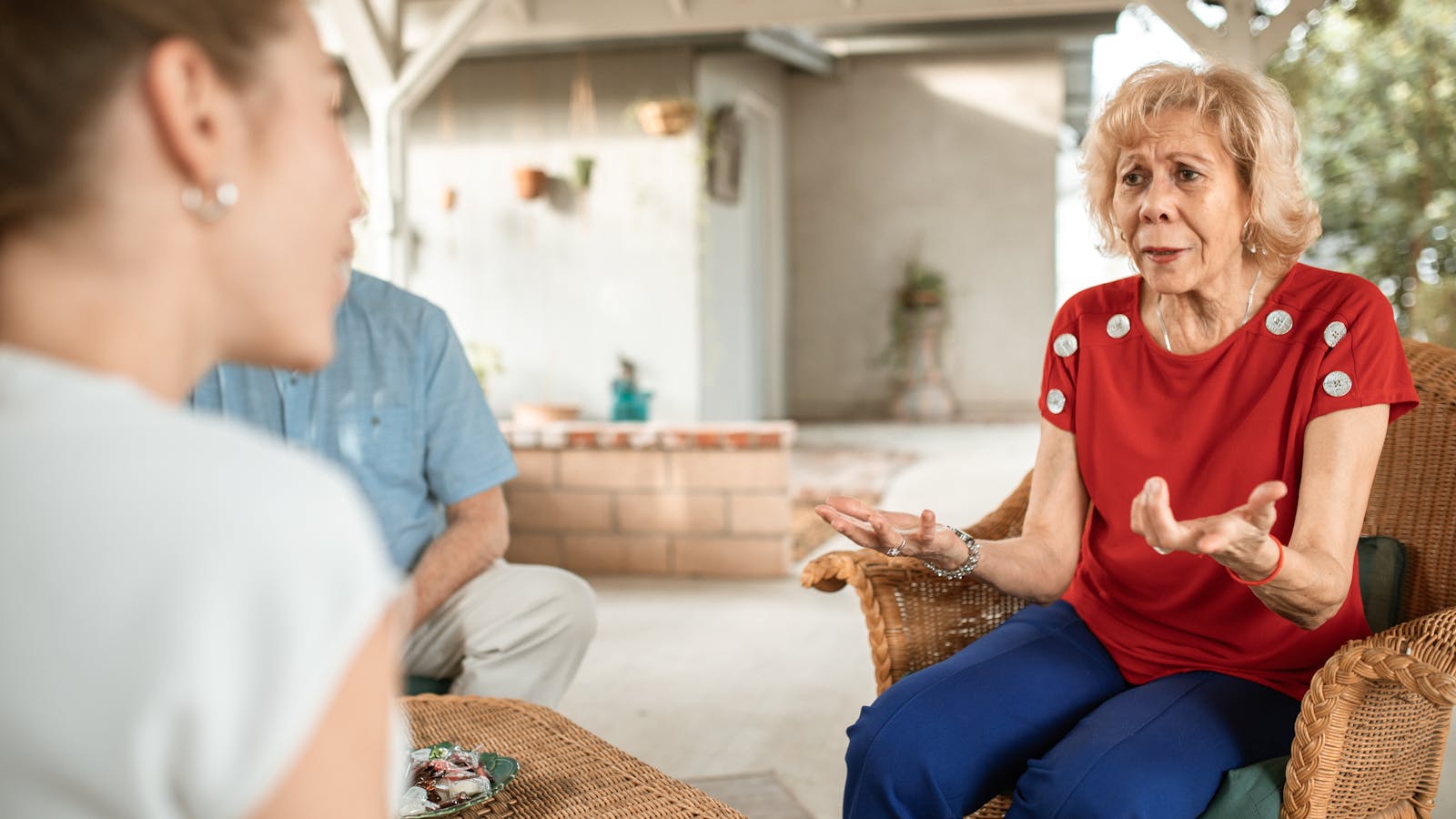
Awareness
10 Signs Your Aging Parent Is Lonely (and What to Do)
The signs are quieter than you'd expect. Here's what to listen for, what to look for, and the one habit that catches loneliness early.
8 min read
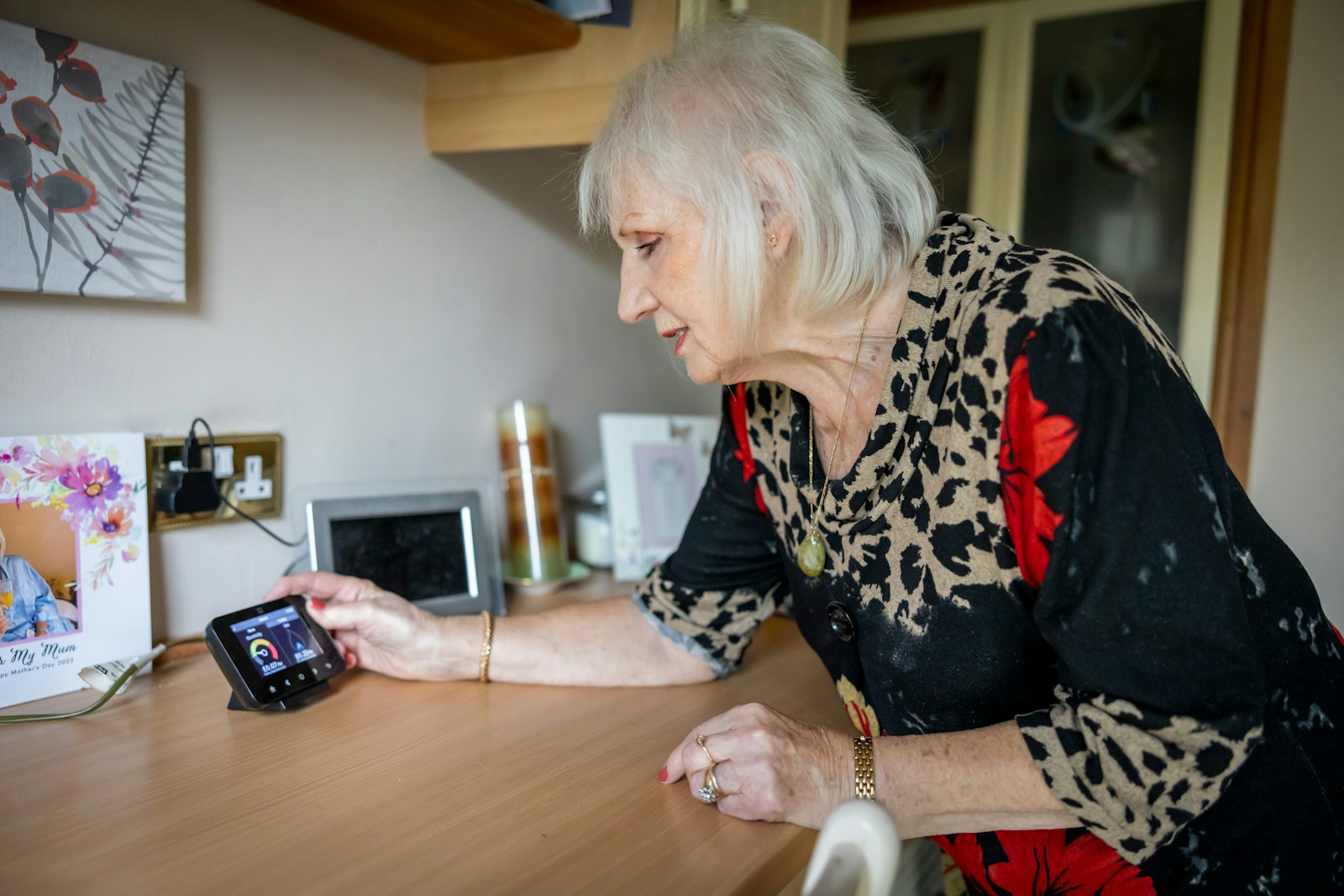
Awareness
Long-Distance Caregiving: A Guide for Canadian Families
About 360,000 Canadians help an aging parent who lives at least an hour away. Here's the system that actually works.
11 min read

Awareness
The Sandwich Generation: Caring for Parents and Kids
About 1.8 million Canadians care for both aging parents and kids. The squeeze is real, structural, and disproportionately falls on women.
7 min read