Awareness
Long-Distance Caregiving: A Guide for Canadian Families
About 360,000 Canadians help an aging parent who lives at least an hour away. Here's the system that actually works.
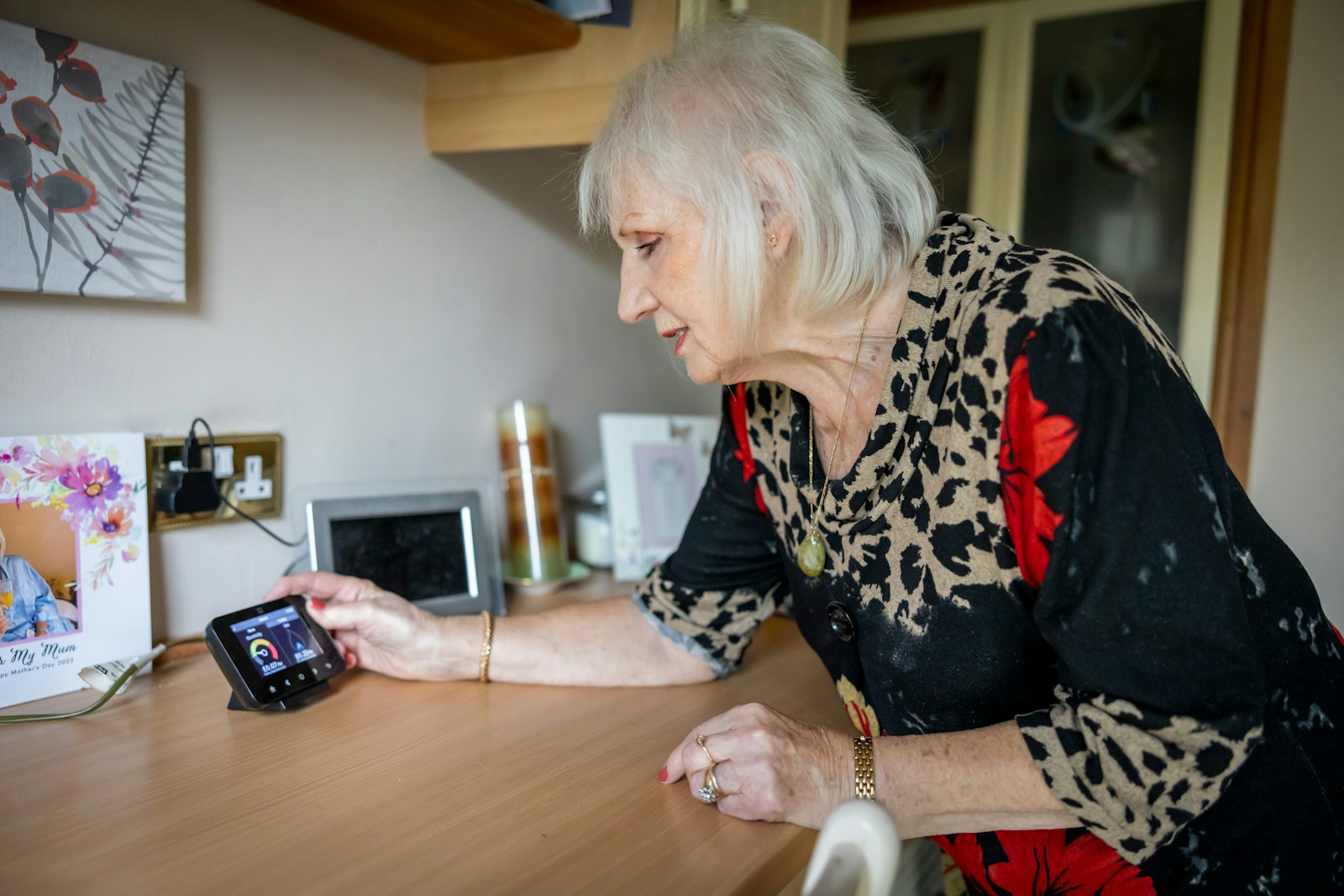
Caregiving from a distance is a design problem. Your parent lives somewhere you don't. You have a job, kids, your own life. You love them. You can't be there every Tuesday afternoon. Most of what you want to know (is she eating, does the bathroom feel safe, has her mood shifted) is exactly the information that doesn't come through on a phone call.
In Canada, this is the modal case, not the exception. About 360,000 Canadians help an aging parent who lives at least an hour away by car, and a quarter to a third of those providing care in several provinces are dealing with even longer distances, per Statistics Canada. The further apart you live, the more the costs pile up: not just emotional strain but missed work days, extra travel expenses, and the chronic not-knowing.
This guide is the system that works for Canadian families. Not a complicated one. A handful of habits and a couple of people on the ground. Built from the research and from conversations with hundreds of Canadian families managing care from a distance.
The Canadian distance reality
Here's how the geography breaks down. Almost three- quarters of adult-child–parent pairs in Canada live within 100 kilometres of each other, and just over half are within 20 km, per Statistics Canada's 2025 geographic-proximity study. But the rest is where things get hard:
- 10 to 12% of pairs live 500 kilometres or more apart.
- 14 to 16% live 100 to 499 km apart.
- When adult children move away, the average distance is 700 to 1,500 km, roughly Toronto to Halifax or Vancouver to Saskatoon.
Provinces don't experience this evenly. British Columbia has the largest proportion of distant family-care relationships: 30% of Canadians providing care to a parent in BC live more than an hour from them, twice the rate in Atlantic Canada (14%), per StatCan's long-distance analysis. The Prairies and Ontario sit in between.
The cost of distance is documented. Among Canadians caring for a parent more than half a day's journey away:
- 62% incurred extra expenses related to care (vs. 30% of those in the same neighbourhood).
- 40% missed full days of work (vs. 28% in the same neighbourhood).
- Among Canadians caring for a parent more than an hour away, 46% of women missed full days of work compared to 27% of men.
None of that is your imagination. The math is harder when you live 1,000 km away. The good news: the system below is designed for exactly this situation.
Start with one predictable call
A daily five-minute call at the same time every day catches more than a long Sunday catch-up does. Predictability matters more than length.
Long calls are for birthdays. What you need is a short, boring, same-time-every-day check-in. Five minutes. Ask the same three questions:
- How did you sleep?
- What did you eat today?
- What are you doing this afternoon?
The answers aren't the point. The point is the pattern. If Mom normally has an answer to question two and suddenly doesn't, that's information. If she's always planned something for the afternoon and now the answer is "nothing," that's information.
Set it at a time that's boring for both of you. Right after her morning coffee, not during your Tuesday meeting.
The reason this works: it gives you a baseline of how she sounds when she's OK. Three months in, you'll know within thirty seconds of a call whether something is off, even if you can't name what. That early-warning system is the most underrated piece of long-distance caregiving infrastructure most families never build.
Put one person in her home, every week
A regular visitor catches what phone calls can't. Not because phone calls are broken; because most of what changes in an aging parent's life lives in the home, not on the call.
Anyone who walks into the house once a week will catch what you can't over the phone:
- Fridge getting thin
- A trip hazard where the rug used to be tucked in
- Mail piling up unopened
- A fall in the last few days no one mentioned
- Skin tone, weight, mood (the things that don't come through on FaceTime)
It can be a neighbour who's already friendly. It can be a family member who lives closer. It can be a trusted companion like a Halekin Kin. The title doesn't matter. The regular eyes do.
When you find someone, ask them to tell you the boring stuff. "Everything was fine" is not useful. "The fridge had milk, bread, a rotisserie chicken, and three yogurts; the living room rug is lifting at the corner" is the kind of report that catches things early.
Why weekly. The research on falls, on social withdrawal, and on nutrition is consistent: the changes that compound take six to twelve weeks to fully manifest, and a weekly cadence catches them at the start of that window. Monthly visits miss the early phase. Twice-weekly is welcome but rarely necessary. Weekly is the sweet spot of useful-and-sustainable.
Get a sense of her baseline, and write it down
The first time you assess something, you have nothing to compare it to. So spend 20 minutes one weekend making notes on what's normal for your parent right now:
- What time does she usually go to bed?
- How many hours a day is she alone?
- How often does she leave the house?
- What medications is she on, and who fills them?
- Who visits her regularly? How often?
- What is she excited about right now?
- What can she still do that she'd be sad to lose?
Put it in a shared note you can update (Apple Notes, Google Docs, whatever your siblings will actually open). It's not a medical record. It's a baseline. In six months you'll be glad you wrote it down. In two years, when you're trying to remember whether she used to read a chapter a night, the answer will be in the document, not in anyone's memory.
Make it easy to hear about small things
Most families miss the early signs because nobody wants to call about something small. A neighbour doesn't want to bother you. A Kin doesn't want to make it sound worse than it is. Your mom doesn't want you to worry.
Lower the bar. Tell the people around your parent: "If anything feels a bit off, text me. It doesn't have to be a big deal. I would rather hear five things that turn out to be nothing than miss one thing that turns out to be something."
Specifically: give every person around your parent your phone number, your preferred contact method (text, not call, for most people), and explicit permission to use it for small stuff. The neighbour who saw your mom looking off on Tuesday won't reach out unprompted. The neighbour who has your number in her phone marked "text me anytime" will.
Plan for the financial and logistical reality
Long-distance caregiving in Canada is more expensive than the math suggests. The StatCan numbers above (62% extra expenses, 40% missed work days for those a half-day's journey away) don't capture flights for unplanned crises, time off without pay for siblings whose employers don't flex, and the cost of paid help.
Three things to do early, before you need them:
Look into the federal tax credit. Canada has a non-refundable tax credit (the CCC, claimed on line 30450) for adult children supporting a parent with a long-term mental or physical condition. For 2025 it's up to $8,601, reducing federal tax by roughly $1,290, per the Canada Revenue Agency. The parent doesn't have to live with you. Most adult children who qualify don't claim it because they don't know they can.
Check the Home Accessibility Tax Credit. A federal credit of up to $3,000 for eligible home modifications (grab bars, ramps, walk-in tubs) for a parent 65 or older. Pairs well with provincial credits (Ontario's Seniors' Home Safety Tax Credit, BC's home renovation credit, etc.).
Map the provincial home-care landscape. Provincial programs (Ontario Health, BC's Community Health Services, Alberta Health Services, the CIUSSS network in Quebec) provide some hours of subsidized in-home support, but eligibility and amounts vary widely. The path is usually: your parent's family doctor or a provincial information line (211 in most of Canada) refers her, an assessment follows, and services start. Wait times vary by region. None of this is fast in a crisis, so start the application when things are calm.
After two years of conversations with families, the through- line is: most distance-care families had no idea any of these existed until well after they could have helped. Knowing about them is half the work.
Technology is a tool, not the system
Smartwatches, fall detectors, medication-reminder dispensers, video doorbells all have a place. None of them replace the weekly visitor or the daily call.
Where tech shines:
- Medication reminders for someone with short-term memory trouble (Hero, MedMinder, or a $20 weekly pill organizer paired with a phone alarm).
- A video doorbell so you can see who's visiting (Ring, Nest).
- A tablet with a simple "call family" home screen for parents who don't drive their phone. GrandPad is the strongest Canadian-specific option; an iPad with FaceTime pinned works too.
- A medical-alert pendant for the time-on-the-floor problem after a fall. Most major Canadian providers offer monthly subscriptions.
Where it doesn't:
- Replacing regular in-person visits
- Assessing mood
- Catching nutritional decline
- Detecting cognitive change
Treat tech as one input among many. The combination of a weekly visitor, a daily five-minute call, and one or two well-chosen devices is more useful than any device on its own.
Plan for the 2am call before it happens
The cost of postponing this conversation is that you have to have it during a crisis. Have it now, while it's calm.
Decide, today, what you would do if you got a call at 2am saying your parent is in an ER:
- Who drops everything? Pre-decide which sibling or family member is the primary, and what backup looks like.
- Who gets on the first flight? Most Canadian airlines have bereavement and compassionate-travel fares (book by phone, not online).
- Where is the power of attorney? She needs one for finances and one for personal care. Talk to a Canadian lawyer; provincial requirements vary. The cost is small. The alternative (a court-appointed guardian during a crisis) is much worse.
- What happens to her home while she's in hospital? Who collects mail, looks after pets, pays bills?
- What are her wishes about end-of-life care? Have her written advance directive (called a personal directive in most provinces, advance care plan elsewhere) on hand.
- What's the post-discharge plan? Hospitals discharge fast. If your parent comes home, who is at the house? If she needs a transitional care setting, do you know which one?
This is the least fun part of long-distance caregiving and the part everyone skips. You won't regret having thought about it.
If you take away one thing
A weekly set of eyes in the house beats almost anything else you can do from a distance. Everything else in this guide is supporting infrastructure around that single habit.
If you don't have someone in your parent's home every week, that's the first thing to fix. This week. A neighbour, a sibling who lives closer, a hired Kin, a friend who'd drop by. The title doesn't matter. The repetition does.
The phone call gives you tone. The weekly visit gives you everything else. The geography problem of long-distance caregiving is solved, more than by anything else, by a trusted person in the same room as your parent at the same time every week.
For the deeper individual playbooks, see our 10 signs your aging parent is lonely, how to talk to your parent about accepting help, and the sandwich generation post.
About the author
Daniel Olaleye is the founder of Halekin, a Canadian companion-care service that matches families with trusted Kin who visit their loved ones weekly. He writes about long-distance caregiving, aging in place, and what families actually need from a companion. Reach him at founder@halekin.com.

Awareness
The Sandwich Generation: Caring for Parents and Kids
About 1.8 million Canadians care for both aging parents and kids. The squeeze is real, structural, and disproportionately falls on women.
7 min read

Awareness
Why Your Parent Says "I'm Fine" When They're Not
"I'm fine" from an aging parent is rarely literal. Here's what it's most often hiding, and the questions that get past it.
7 min read

Awareness
Burnout from Caring for a Parent: Signs You Need Help Too
About 1 in 4 Canadians providing unpaid care reports fair or poor mental health. Here's what burnout looks like, and how to tell it from being tired.
8 min read